Research, findings, and educational resources supporting the Dining Chair Classification System.
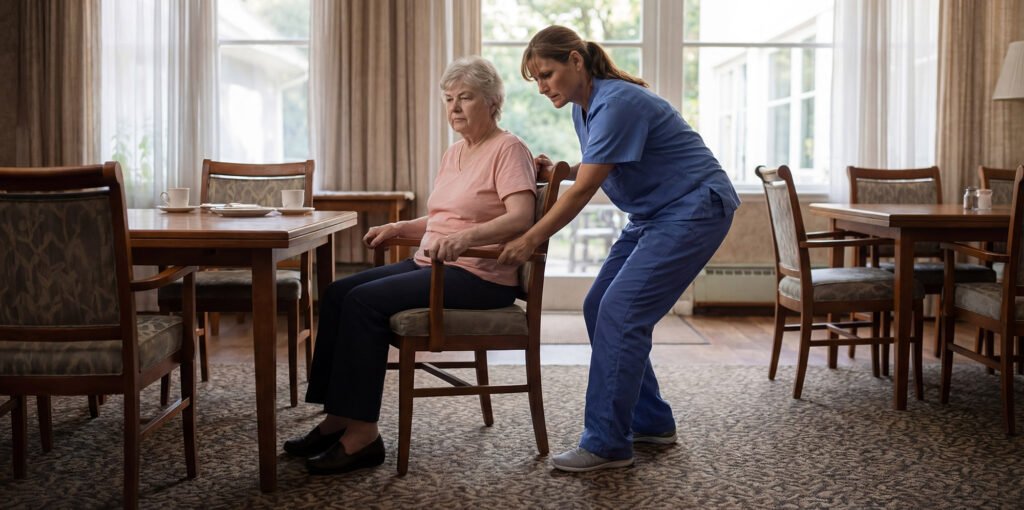
The Dining Chair Classification System (DCCS) exists to ensure that seating within care communities is intentionally designed and selected to match the mobility, safety, and dignity needs of residents, while reducing physical strain and injury risk for caregivers.
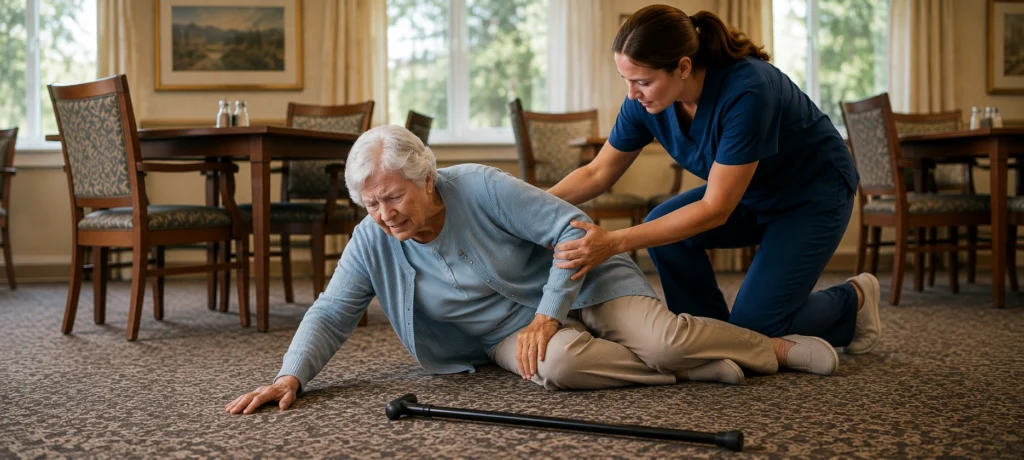
Falls in senior care communities are among the most studied, most documented, and most costly events in long-term care. Yet one contributing factor remains almost entirely overlooked in fall prevention literature and facility safety audits: the dining chair.
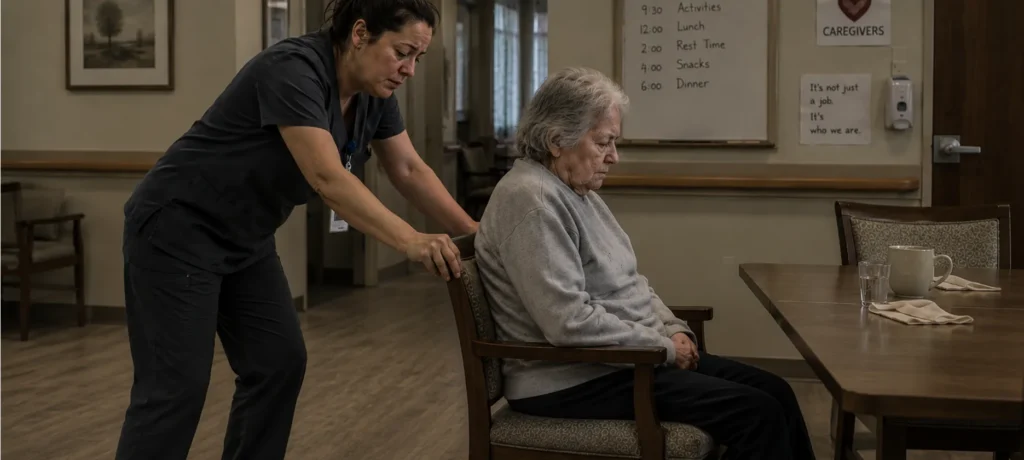
The staffing crisis in senior care is not a mystery. The numbers are grim, the causes are debated, and the solutions offered range from pay increases to culture change to better scheduling. What is rarely discussed because it seems too small, too mundane is the chair.
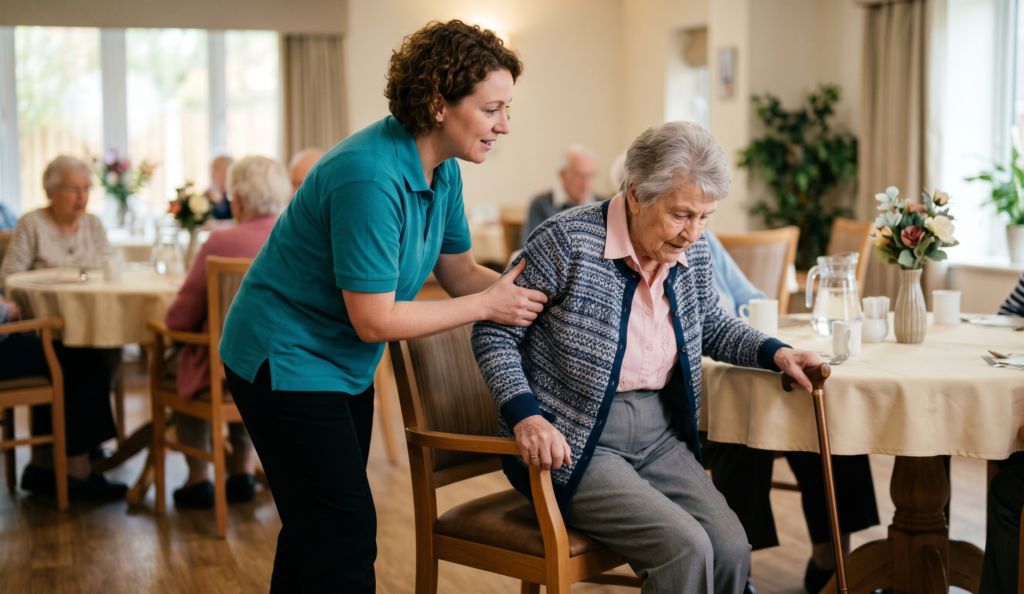
Falls in senior care communities are among the most studied, most documented, and most costly events in long-term care. Yet one contributing factor remains almost entirely overlooked in fall prevention literature and facility safety audits: the dining chair.
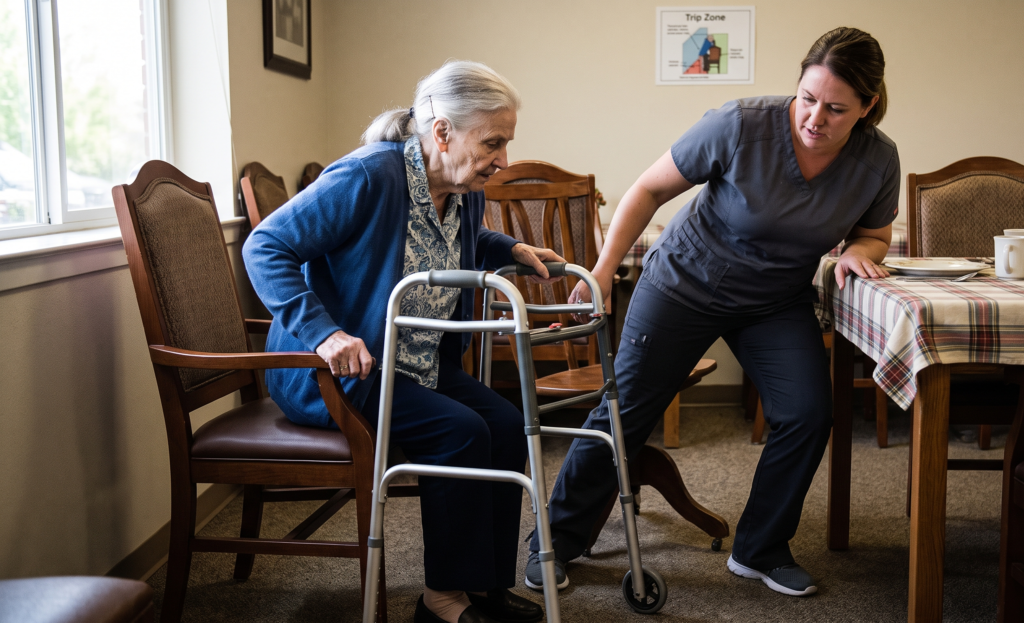
The “Trip Zone” is the confined space created when a resident needs assistance getting into a standard dining chair. Learn how chair position, lateral movement and backward stepping can create unnecessary risk for residents and caregivers.
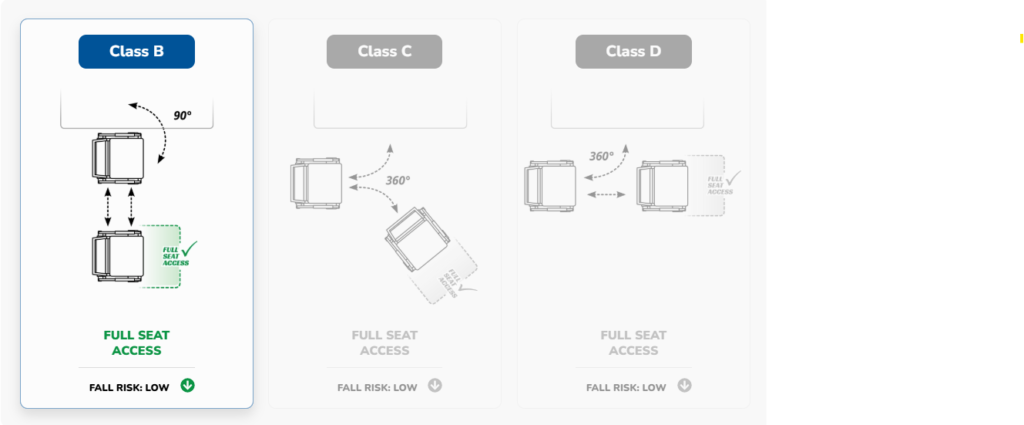
Class A and Class B dining chairs may look similar, but they serve different resident needs. Understanding the difference helps care teams match seating to a resident’s mobility, balance, and level of assistance.

Full seat access allows residents to approach and enter a dining chair from the front, reducing the backward stepping, lateral movement, and repositioning often required with standard dining chairs.
In senior care, a dining chair is more than furniture. It plays a daily role in resident mobility, transfer safety, mealtime positioning, caregiver safety, and dignity, making seating an important part of the care environment.
Senior living dining rooms should do more than photograph well. Explore how person-centred design, meaningful surroundings, and accessible seating can create spaces that reflect residents’ lives and help generate new memories.