Walk into many senior-living dining rooms and a quiet contradiction becomes visible. On the wall hangs a professionally lit, carefully composed photograph of that same dining room. The space is decorated with evidence that the space exists. It is a small thing, easy to walk past, and yet it says a great deal about senior living dining room design and about who the room is really for.
The photograph is usually not for the residents who eat there. It is for the families who tour there. Understanding that distinction opens up a more useful design conversation: the difference between designing a room to photograph well and designing it to generate memories well.
Key takeaways
- Many senior living dining rooms are designed to photograph well rather than to generate memories well; the photo-of-the-room-in-the-room is the perfect symptom.
- Marketing imagery shows the idea of dining poised, effortless, needing nothing while the room beneath it holds the reality of assisted living.
- The answer is not to photograph the reality but to build an environment that affirms that ordinary, imperfect life belongs there.
- Person-centred design familiar objects, local history, and seating that lets residents actually reach the table generates the memories that marketing photography only imitates.
Why the photograph is there
The reasons are largely practical. Interior designers require large-scale artwork to fill significant wall space. Marketing teams already own high-quality architectural photography of the community. An image of the room is safe, neutral, brand-consistent, and unlikely to offend anyone. In some cases it reflects a sincere design philosophy of reinforcing a sense of place.
None of that is wrong, exactly. But it points to a broader pattern worth naming. When the safest, most brand-consistent choice consistently wins, a community can drift toward decorating for the tour rather than for the years of daily life that follow it.
The idea of dining versus the reality of living
The photograph presents the idea of dining poised expressions, flawless place settings, everyone socially engaged, no one in need of anything. The room beneath it contains the reality of living. One resident needs help cutting their food. A drink is spilled. Another eats slowly, and a third has little appetite that day. A caregiver moves among several people at once. The meal can be nutritionally correct and operationally successful without ever feeling pleasurable.
That gap is what can make the image feel generic and cold. The people in the photograph are not permitted to be old; they are models for an aspiration rather than reflections of the residents seated below them. And residents notice, even when no one says so.
Photograph well, or generate memories well
A dining room is meant to be a place where life happens. Ideally, people recognise themselves and each other in it their friends, their families, their town, their history, celebrations, grandchildren, staff, and the small landmarks of a shared life. Those are the things that give someone a reason to look up and say, “I remember.”
A room optimised for photography tends to strip those things out, because personal, specific, lived-in detail is harder to photograph cleanly and does not generalise across a brochure. The more a room is tuned for the camera, the less it tends to hold of the particular people who live in it. Person-centred, or resident-centred, design deliberately reverses that trade.
What generates memory rather than marketing
Designing for memory does not mean abandoning beauty; it means letting beauty carry meaning. In practice that includes:
- Personal and local imagery residents’ own photographs, local landmarks, community history rather than only generic architectural shots.
- Familiar objects and textures that echo the homes residents came from, not a hotel lobby.
- Room to celebrate birthdays, holidays, visits from grandchildren so the space accumulates its own history over time.
- Seating that lets every resident actually get to the table and stay comfortably at it, so the social life the room is designed for can actually take place.
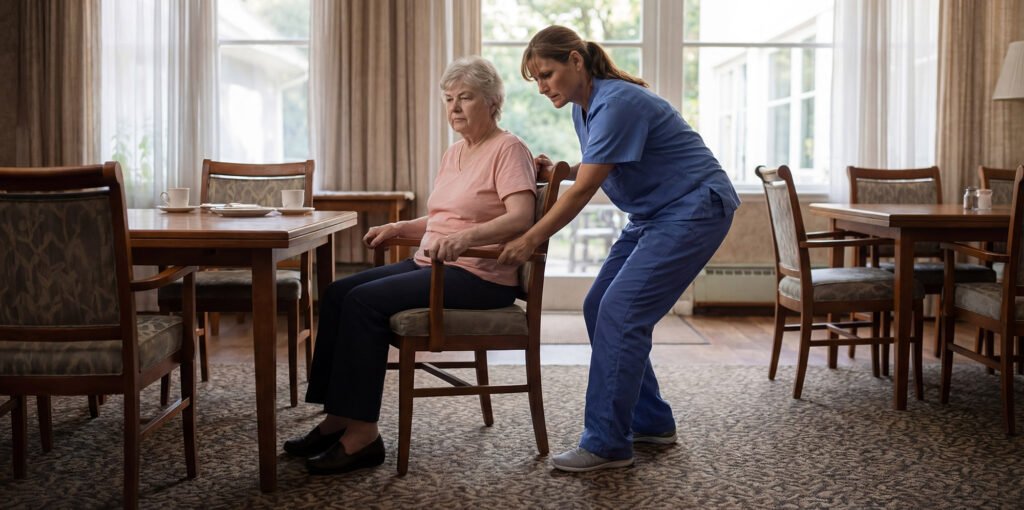
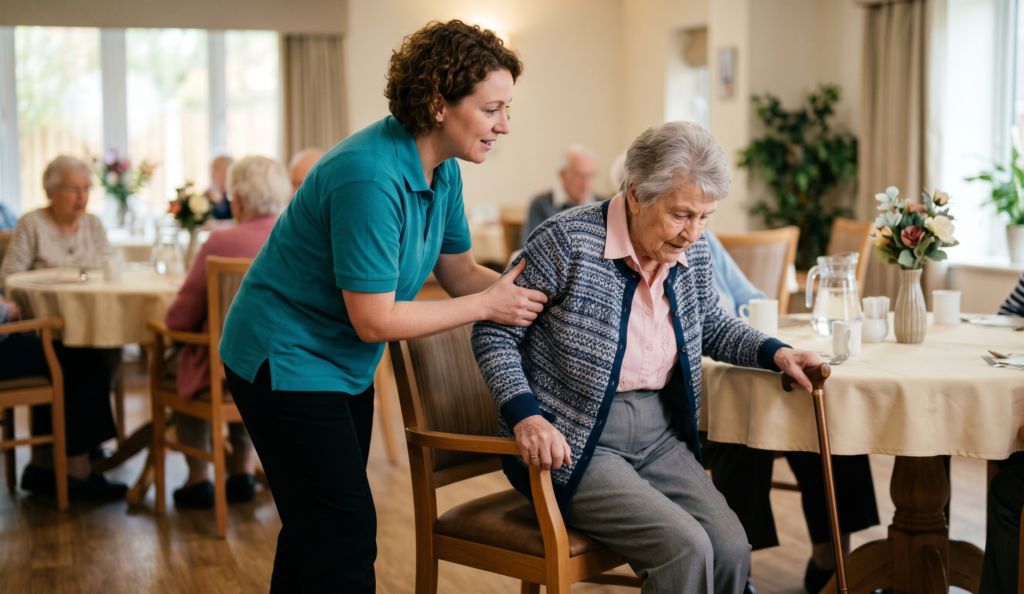
That last point is the one most often missed. A room can be flawlessly styled and still require a resident to shuffle sideways and brace against the table simply to be seated. If the seating quietly excludes people from the table, no amount of wall art will generate the memories the room was built to hold.
The answer is not to photograph the reality
The answer is to create an environment that affirms that ordinary, imperfect life belongs in the room because life belongs in the room. A dining room does not require every resident to dine elegantly. It requires the ability to preserve the pleasure of the meal even when eating requires assistance: the aroma of coffee, bread passed around the table, familiar dishes, a caregiver who sits rather than hovers, and the dignity of taking whatever time is needed.
The photograph asserts what dining should look like. A better environment communicates something more humane: however a resident needs to eat on a given day, they still deserve to enjoy being at the table.
Where seating enters the picture
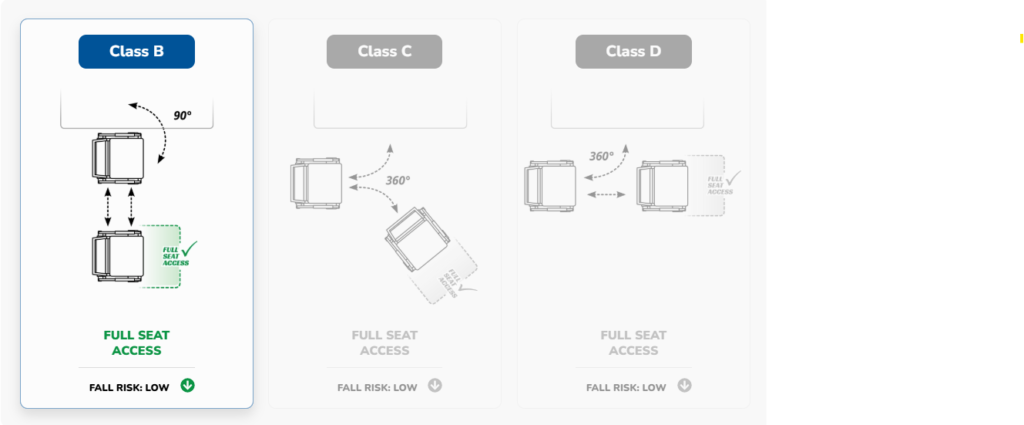
This is precisely the point at which the chair ceases to be décor. Designing for memory rather than marketing means designing the entire moment, including the seating that either supports a resident’s place at the table or quietly undermines it. The Dining Chair Classification System exists to make that part of the design intentional so the room does not just look like somewhere life happens, but actually lets it happen.
Frequently asked questions
Why do senior living communities hang photos of the dining room in the dining room?
Usually for practical reasons: designers need large artwork, marketing already owns the photography, and an image of the space is safe and brand-consistent. The image is generally aimed at prospective families touring the community rather than at the residents who eat there daily.
What is person-centred dining design?
Person-centred (or resident-centred) dining design shapes the dining experience around the people who actually live in the community their histories, preferences, abilities, and dignity rather than around a generic ideal. It favours familiar, meaningful detail and seating that lets every resident take part over imagery that simply looks appealing in a brochure.
How do you make a senior living dining room feel homelike?
Combine warm, residential materials and personal or local imagery with practical inclusion: comfortable, supportive seating that lets residents reach the table, unhurried service, and space to celebrate. A homelike room is one where imperfect, ordinary life is welcome, not one that only photographs well.
Does the dining environment affect resident wellbeing?
Mealtimes are among the most important social anchors of the day in senior living. An environment that lets residents comfortably join the table supports engagement, appetite, and dignity, while one that makes being seated difficult can quietly push people to disengage. Design choices, including seating, are part of that picture.
Download the complete DCCS Decision Guide (PDF) for the full A–D framework and class-by-class detail. To discuss your community’s dining room, contact us or call 1-888-678-2060.