DCCS Purpose
The Dining Chair Classification System (DCCS) was developed to enhance the dining experience for today’s seniors.
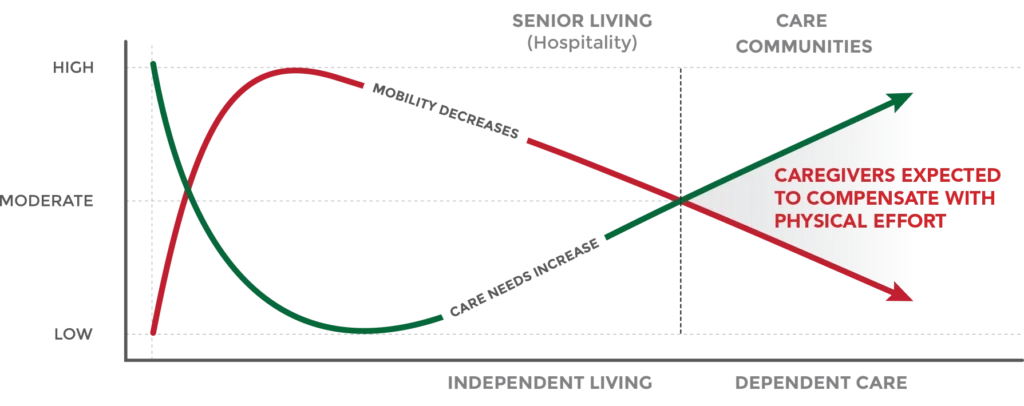
The DCCS ensures that seating within care communities is intentionally designed and selected to match the mobility, safety, and dignity needs of residents, while reducing physical strain and injury risk for caregivers.
Did You Know...
Dining chairs were never designed to move with a seated person the chair
Chairs rely on friction to remain stable
Cushioned flooring (reduces injuries) increases the physical demands of caregivers providing mealtime assistance
As a Result...
Position the Chair
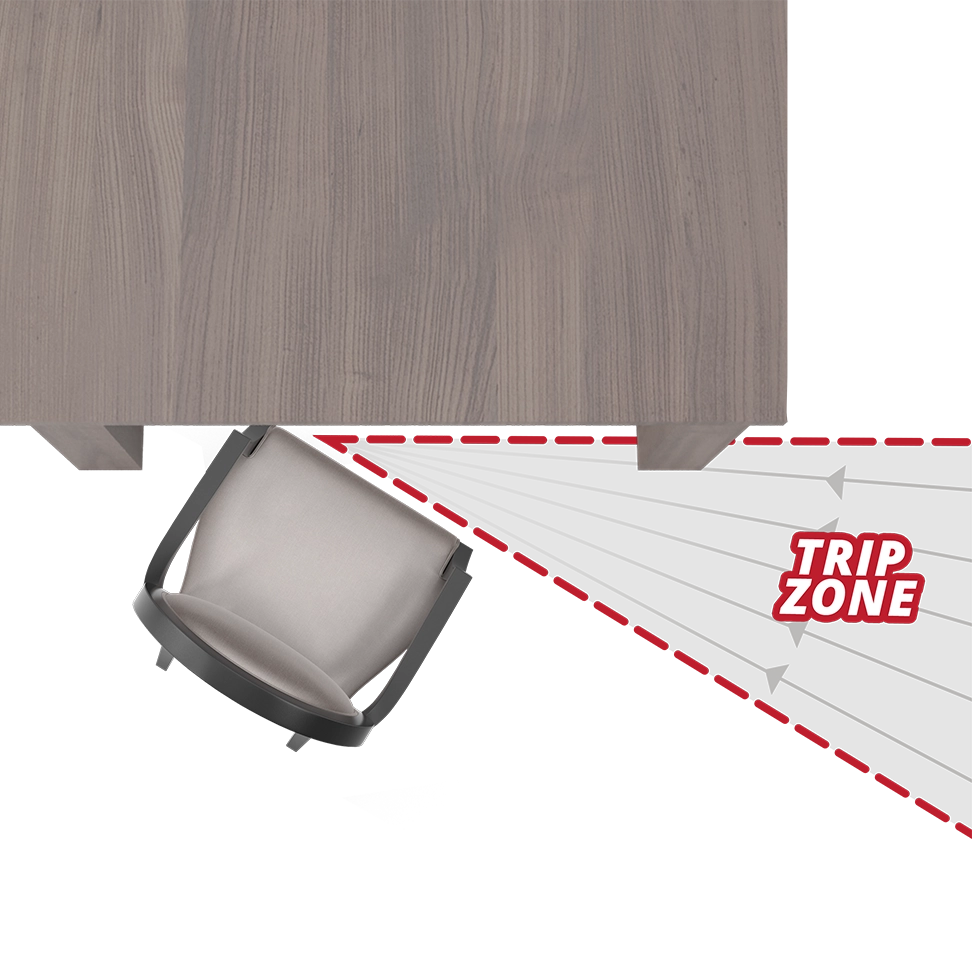
…caregivers instinctively place the chair at a 45° to the table
1. Getting Seated
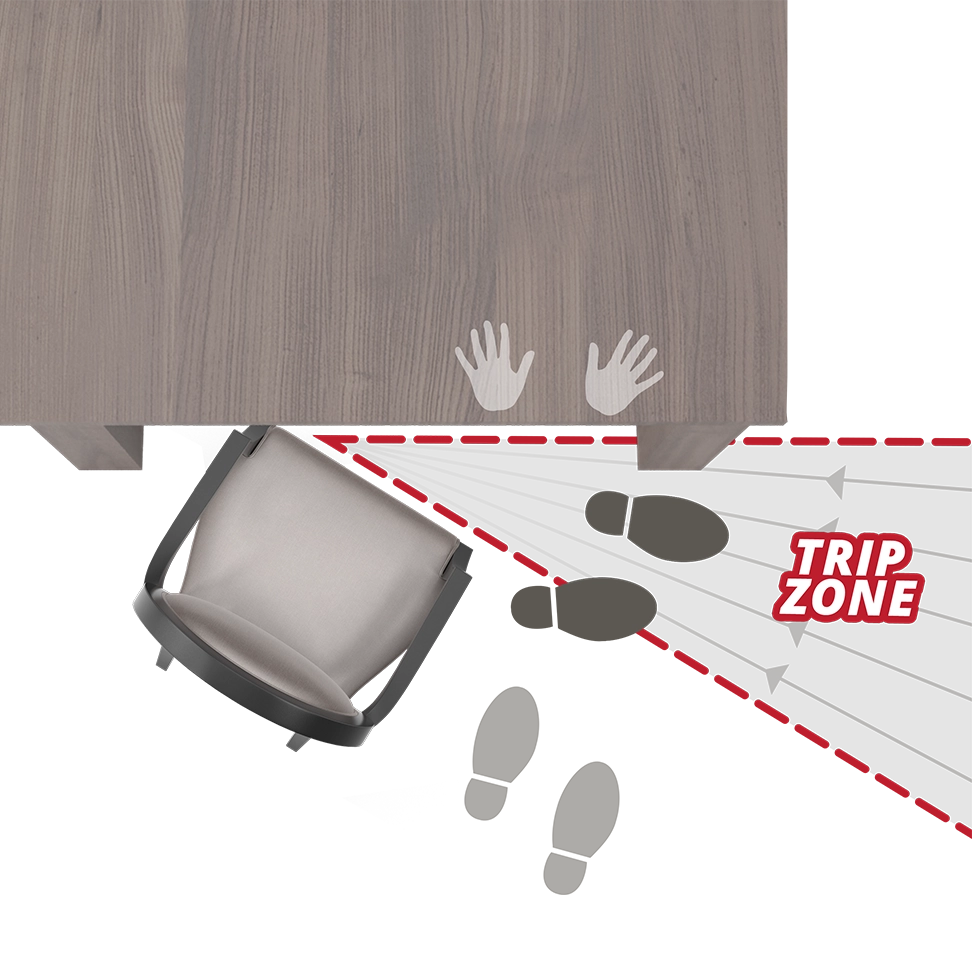
…seating the person requires shuffling, stepping back, and leaning on the table
2. Move the Seated Person
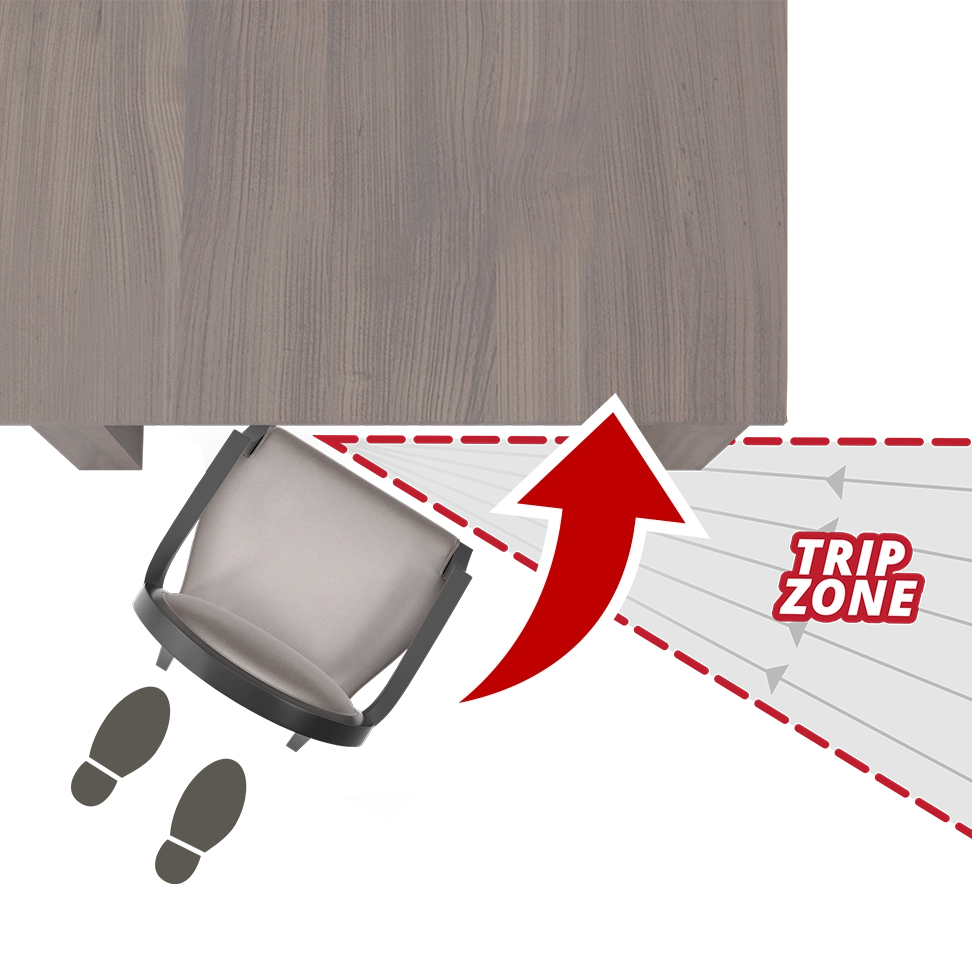
…caregivers are expected to push the seated person from behind to position them at the table
Therefore...
→ Chairs wear out quicker
→ Care staff burnout quicker
→ Retention suffers
Why Understanding the TRIP ZONE Matters...
Class A
- Standard dining chair
- THE TRIP ZONE is created when a standard dining chair is used in a dependent care community
The ‘Trip Zone‘ is the area around the front of table into which a person needing assistance must navigate.
Trips and falls occur often in this area as both the senior and caregivers are expected to:
(1) shuffle sideways (2) step backwards (3) lean on the table
for balance as the caregiver assists an individual get seated.
A design fails when human effort is required.
Trips and falls occur often in this area as both the senior and caregivers are expected to:
(1) shuffle sideways (2) step backwards (3) lean on the table
for balance as the caregiver assists an individual get seated.
A design fails when human effort is required.
Eliminating the TRIP ZONE...Provides Full Seat Access
Class B
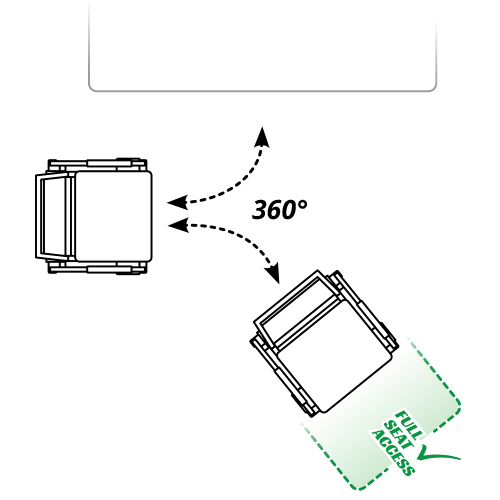
Full Seat Access
Fall Risk: Low
Class C
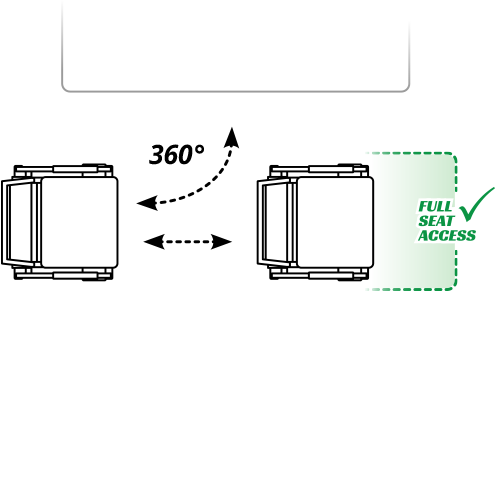
Full Seat Access
Fall Risk: Low
Class D
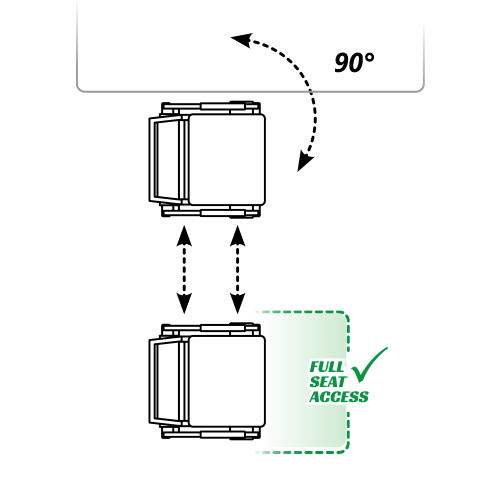
Full Seat Access
Fall Risk: Low
Seating Classes
Class A
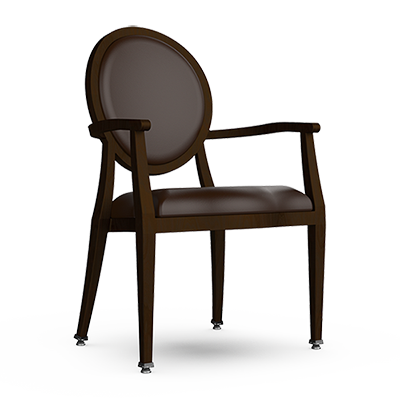
Standard Chair
Designed Not to Move
Use Case: Traditional dining environments
Residents who can safely self-transfer and reposition
Residents who can safely self-transfer and reposition
Class B

Controlled Movement Chair
Designed to Move to the Person - By Default, Always Locked
Use Case: Caregiver-directed movement with manual braking
Residents requiring significant assistance or guided positioning
Residents requiring significant assistance or guided positioning
Class C

Independent Extension
Designed to Move to the Person - Do It Yourself
Use Case: Supports controlled mobility and independence
Residents at high risk of falls or unsafe movement; emphasis on controlled stability
Residents at high risk of falls or unsafe movement; emphasis on controlled stability
Class D

Guided Mobility Chair
Designed to Eliminates Interference with the Table
Use Case: Adds controlled movement while maintaining stability
Residents who require occasional or stability support
Residents who require occasional or stability support