Introduction
The staffing crisis in senior care is not a mystery. The numbers are grim, the causes are debated, and the solutions offered range from pay increases to culture change to better scheduling. What is rarely discussed because it seems too small, too mundane is the chair.
Specifically, the dining chair. The piece of furniture that care staff interact with dozens of times per shift, in a physical sequence that has never been optimized for the human body performing it.
Caregiver burnout is multifactorial. But physical exhaustion and injury are among its primary drivers and the mealtime seating process, repeated three times daily across a full resident load, contributes to that exhaustion in ways that are measurable, predictable, and preventable.
What Mealtime Assistance Actually Demands of a Caregiver’s Body
Ask any experienced care aide what the hardest part of their shift is and mealtime will frequently appear in the answer. Not because the work is emotionally difficult though it can be but because the physical demands of seating residents with mobility challenges are genuinely severe.
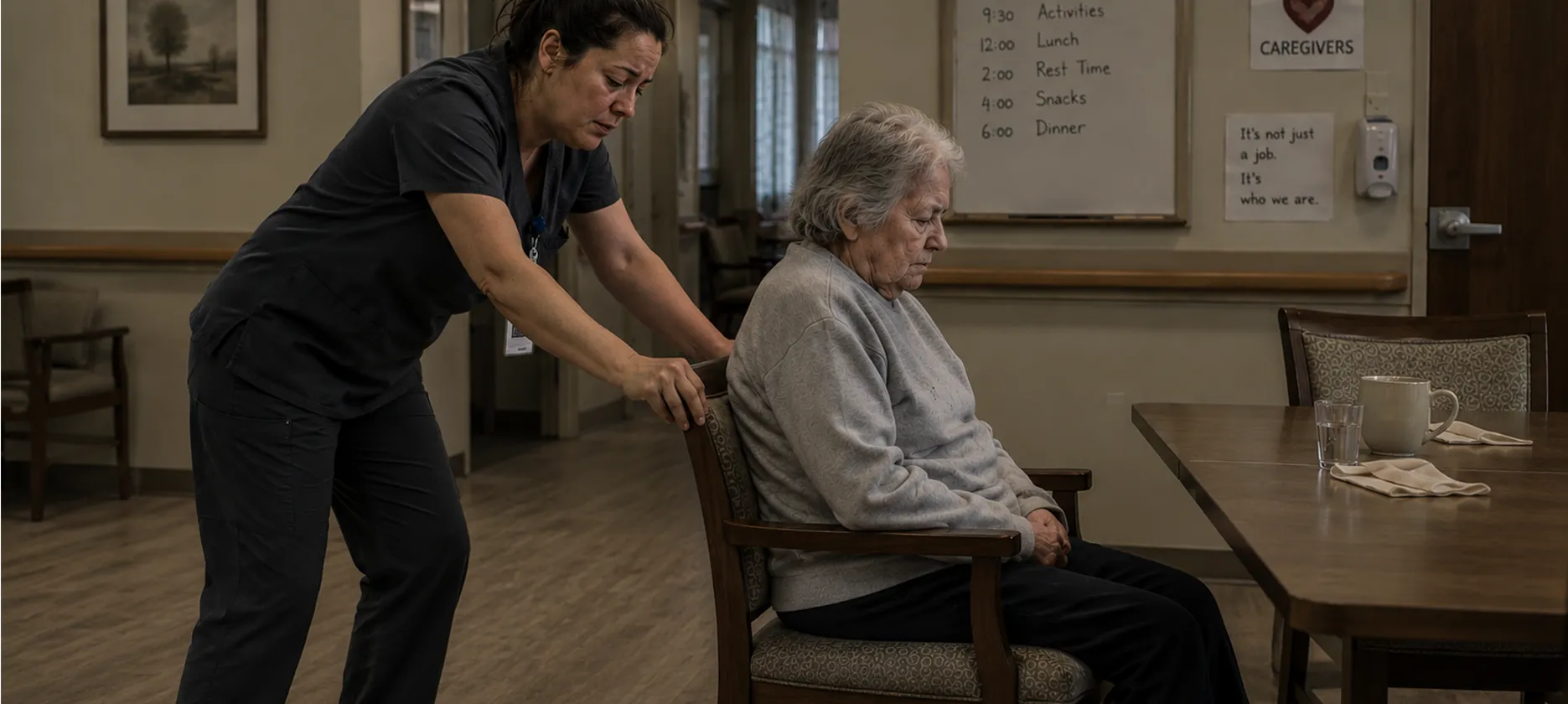
A caregiver assisting a semi-dependent resident into a standard dining chair must: approach from the side, position the chair at an angle, support the resident’s weight during descent, step backward while guiding, and then push the occupied chair forward to the table across whatever flooring the facility uses. On cushioned flooring, that final push can require sustained force against significant resistance.
Multiply this by the number of residents requiring assistance, by three meals per day, by five or more shifts per week. The cumulative load on the caregiver’s lower back, shoulders, and knees is not theoretical. It is documented in healthcare worker injury statistics, in workers’ compensation claims, and in the conversations care staff have with each other when they think no one is listening.
The Connection Between Seating Design and Staff Turnover
Physical injury is a leading predictor of healthcare worker attrition. When caregivers leave a facility, exit interviews frequently cite physical strain as a contributing factor often framed as “the job is too hard on my body” rather than named as a specific task. The specific task, more often than not, is patient handling.
Mealtime seating is patient handling. It is not classified as such in most facility protocols, which tend to focus on transfers from beds, lifts, and wheelchair repositioning. But the biomechanical demands are comparable, and the frequency is far higher.
Facilities that reduce the physical demands of routine care tasks retain staff at higher rates. This is not an abstraction it is the operating reality of any community that has invested in mechanical lifts, slide sheets, or ergonomic equipment for bathing and dressing. The same logic applies to the dining room.
How the Right Chair Changes the Mealtime Experience for Staff
When dining chairs are selected to match the mobility level of the residents using them which is what the DCCS framework enables the physical demands on caregivers change fundamentally.
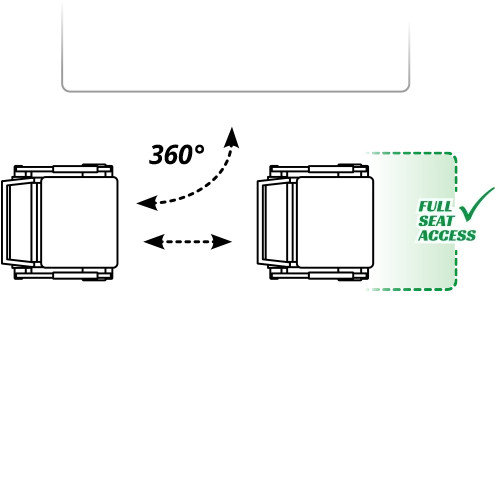
A Class C or Class D chair, for example, allows the caregiver to direct the movement of the chair rather than the movement of the person. The resident does not need to shuffle sideways. The caregiver does not need to push a weighted chair across resistant flooring from behind. The dangerous backward-stepping sequence disappears.
What replaces it is a controlled, forward-facing, dignified process in which the caregiver guides the chair to the resident, lowers the resident into full seat access, and moves the chair to the table in a single fluid movement. Less force. Less risk. Less wear on the body that the industry desperately needs to keep working.
The Language That Gets Lost in Procurement Conversations
When care facilities purchase dining room furniture, the conversation almost never includes the caregiver. It includes budget, durability, aesthetics, and sometimes infection control. The person who will use that chair thirty times a day to seat and unseat residents whose back will absorb the cumulative impact of its design is not at the table.
The DCCS gives administrators and procurement teams a framework for bringing caregiver ergonomics into that conversation, in concrete and defensible terms. Not as a soft concern about staff wellbeing, but as an operational variable that affects injury rates, workers’ compensation costs, staff retention, and ultimately the quality of care delivered at every meal.